Communications & Electronics
Hear clearly. Stay connected. Remain aware.
Your personnel need to receive instructions, communicate with their team, and remain aware of what is happening around them.
WEPA helps law enforcement, military personnel, first responders, and private security teams select communication equipment around their duties, noise exposure, and existing systems.
We work with partners including OTTO Engineering, Sordin, SILYNX, and INVISIO for communication headsets, hearing protection, and related accessories.
We consider the complete setup: the user, the headset, the controls, the connections, and the equipment already in service.
Whether you need to equip a new team or adapt an existing configuration, we review compatibility and available options with the manufacturers before proposing a solution.
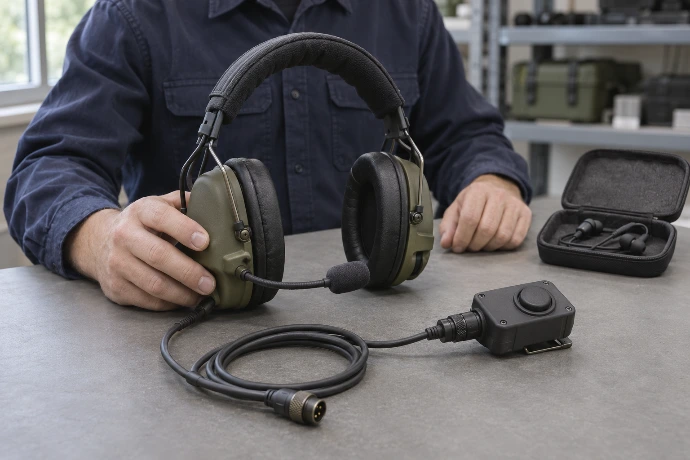
Communications That Fit the Assignment
From Quiet Movement to Intense Noise
Assault teams and military personnel may need to communicate discreetly, then remain intelligible amid gunfire, explosions, shouted commands, sirens, and alarms.
Helicopters, armored vehicles, open vehicles, and wind add further demands on hearing protection and voice transmission.
We help you select headsets, microphones, and controls around these changing conditions, with attention to discreet communication, speech clarity, and awareness of surrounding sounds.
Connecting the Team
& Its Leaders
An assault team member, a team leader, and a vehicle crew do not necessarily need access to the same communication channels.
Some personnel need to communicate within their team while maintaining contact with command or supporting elements.
We help you define the connections and controls each role requires, accounting for the devices in use and the transitions between mounted and dismounted operations.
Integrating With the Equipment You Wear
A headset needs to work with the helmet, eye protection, and respiratory protection your personnel wear.
Cables and controls also need to remain accessible alongside body armor and load-carrying equipment.
We review fit, mounting options, cable routing, and operation with gloves.
When a component changes, we check compatibility with the manufacturers before recommending what to retain or replace.
What We Check Before You Equip Your Team
A headset is one part of a communication system.
We review the proposed configuration with your technical contacts and the manufacturers to identify compatibility requirements and the points your personnel need to evaluate.
Device & Connection Compatibility
We start with the exact radio models, control units, and accessories your personnel use.
A connector that physically fits does not, by itself, establish compatibility.
We confirm the appropriate cables, interfaces, and power requirements with the manufacturer, including configurations involving more than one communication device.
Evaluation With Your Personnel
Technical documentation helps narrow the options.
An evaluation with representative users helps assess how a proposed setup works with their equipment and responsibilities.
We help define what needs to be checked, such as transmitted speech clarity, access to controls, and comfort during extended wear.
Any trial arrangements are confirmed with the manufacturer.
Support Throughout Service
Ear seals, eartips, cables, batteries, and other components require attention throughout the equipment’s service life.
We clarify care requirements, replacement options, and manufacturer support arrangements before the order.
Your team can then plan routine upkeep and identify the spare components needed to keep equipment available.
Share the exact radio, headset, and control unit references, the number of users, and the roles you need to equip.
Include your delivery location and target date.
Describe the practical issue you want to resolve, such as unclear transmissions, difficulty accessing controls, or discomfort with other protective equipment.
We can agree on how to share sensitive technical details separately.
Yes. A team member may need a straightforward setup, while a supervisor may need connections to multiple devices.
We review those requirements together so each proposed configuration supports its intended role.
We also identify which components can be shared across configurations to simplify spare parts and support.
Yes. Tell us which personnel need to be equipped first and which systems must remain in service during the transition.
We help define the scope of each phase, confirm supplier availability, and identify any dependencies between components. This gives your team a basis for planning evaluation, purchasing, and rollout.
Planning Your Communication Setup
Start with the equipment already in service and the difficulties your personnel encounter.
We will help identify the information needed to review suitable configurations with the manufacturers.